MICROSCOPE-ASSISTED ENDODONTICS

Root Canal Treatment in Ibi

We treat the infection inside the tooth to save it. At Hernández & Espuelas, we perform root canal treatments using a dental microscope and advanced techniques to ensure maximum precision and the best possible outcome.
1st Visit FREE
Financing for up to 60 months
With a dental microscope
Painless
Root Canal Treatment in Ibi

What is a root canal?

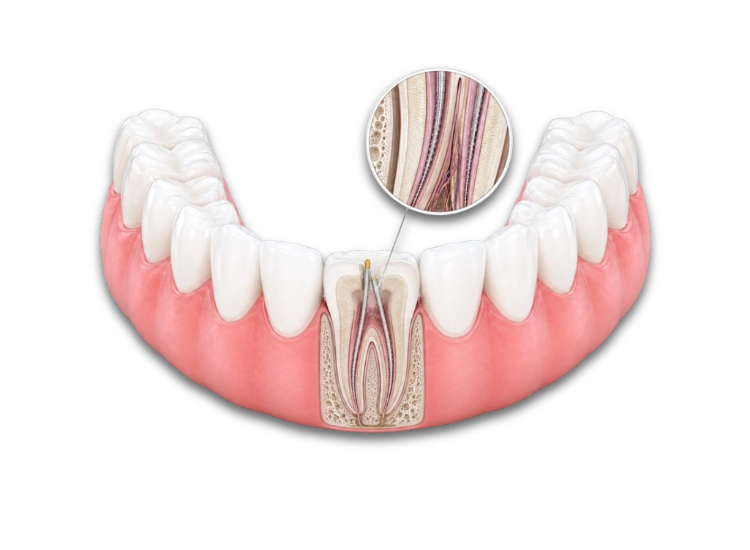
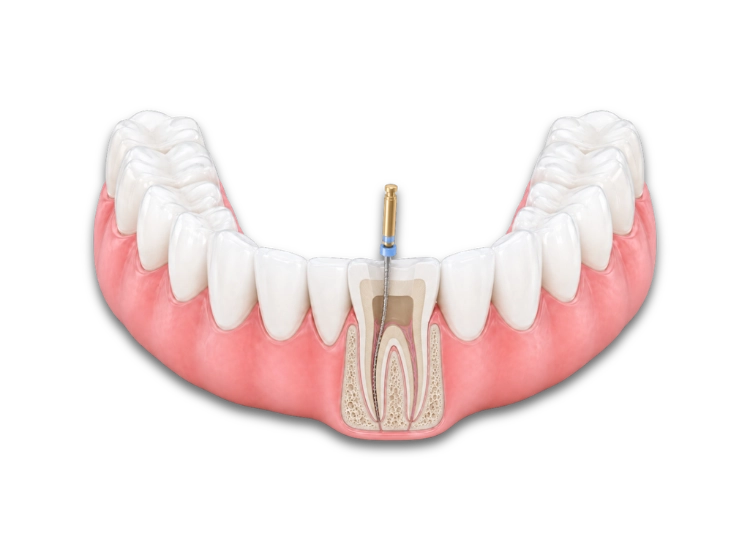
A root canal, commonly known as “killing the nerve,” is a treatment that removes infected or damaged dental pulp—the nerve and blood vessel tissue inside the tooth—to treat the infection and preserve the tooth in the mouth. Saving a natural tooth is always the best option compared to extraction, even though extraction may seem like the easiest solution in the short term.

At our clinic, we perform root canal treatments using a dental microscope, which allows us to work with much greater precision than conventional techniques, detect additional canals, and ensure a more thorough cleaning of the entire root canal system. The result is a more predictable treatment with a better long-term prognosis.

Root Canal Treatment Using a Microscope

The dental microscope increases the precision of treatment, allows for the detection of difficult root canals, and significantly improves the prognosis in all cases.

No pain during treatment

Root canal treatment has a reputation for being painful, but with the right anesthesia, the procedure is completely painless. It is the underlying infection that causes pain, not the treatment itself.

Preserve Your Natural Tooth

A tooth that has undergone root canal treatment and been properly restored can last a lifetime. Extraction should always be a last resort, not the first option.

Common Signs

When do you need a root canal?

It’s not always easy to tell if you need a root canal; in some cases, a tooth may be infected without showing any noticeable symptoms. These are the most common signs that indicate the nerve is affected and that action needs to be taken.

Severe or persistent pain

If you have a toothache that won’t go away, gets worse with heat, or wakes you up at night, it may be a sign that the pulp is inflamed or infected and needs urgent treatment.

Extreme sensitivity

Sensitivity that lasts for several seconds after the cold or hot stimulus is removed—rather than disappearing quickly—may indicate that the nerve is compromised.

Swelling or a lump on the gum

A dental abscess may appear as a pocket of pus near the root of the tooth. It requires immediate attention to prevent the infection from spreading.

Discolored tooth or previous injury

A dental injury can damage the nerve even if it doesn’t hurt at the time. If the tooth later darkens, it’s a sign that the pulp has died and action must be taken.

What kind of root canal treatment do I need?

The type of treatment you need depends on the stage of the infection, the anatomy of the tooth, and whether this is a new case or one that has been treated before. After the diagnosis, Dr. Molina will explain which option is best for your situation.

conventional root canal treatment

Conventional Root Canal Treatment

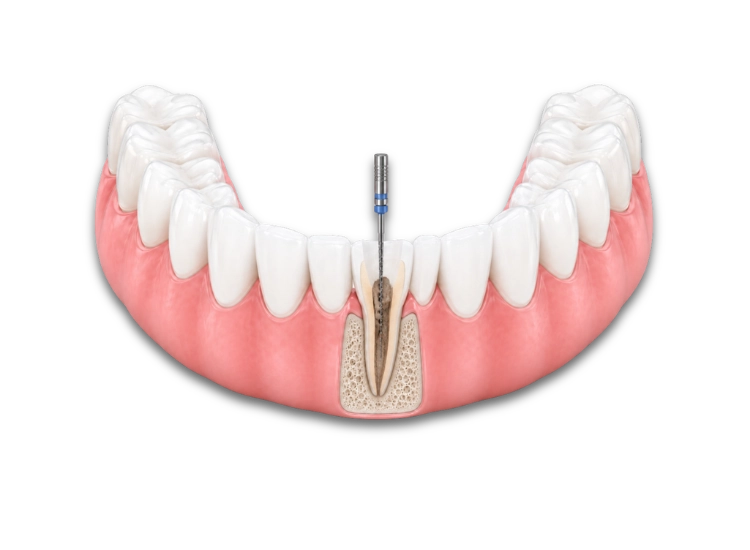
The standard treatment involves removing the infected pulp, cleaning and disinfecting the root canals, and sealing them to prevent reinfection. This treatment is recommended when the infection is detected early and the root canals are accessible.

Root Canal Treatment Using a Microscope

Root Canal Treatment Using a Microscope

The surgical microscope magnifies the field of view up to 25 times, allowing for a level of precision that is impossible to achieve with the naked eye. It is particularly well-suited for calcified, curved, or hard-to-locate ducts.

Endodontic Retreatment

Endodontic Retreatment

When a previous root canal treatment has not resolved the infection or a new infection has developed, retreatment involves reopening the root canals, removing the previous filling material, cleaning the canals again, and refilling them. Dr. Molina has specific training in complex retreatments.

Apical surgery

Apical surgery

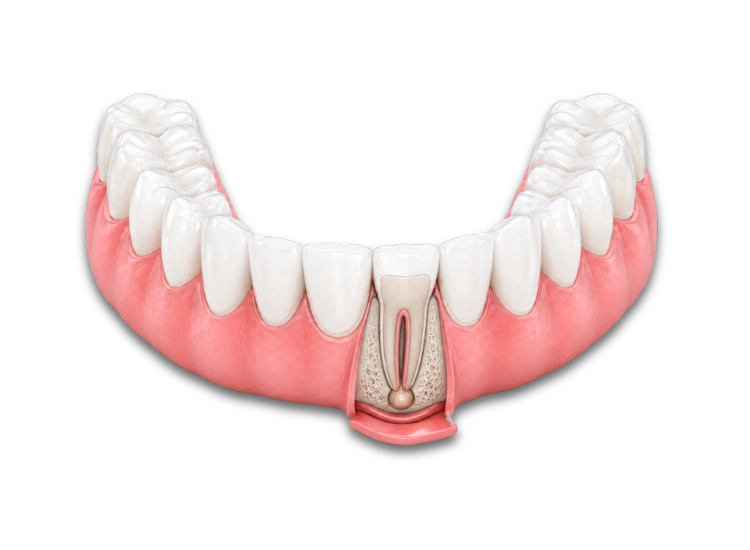
When root canal treatment is not sufficient, apical surgery provides direct access to the root apex to remove the infected tissue. It is the last resort before extraction and, in many cases, saves teeth that seemed beyond saving.

BEFORE YOUR APPOINTMENT

6 Things You Should Know About Root Canal Treatment

Root canal treatment is one of the treatments surrounded by the most myths. We’ll clear up the most common questions so you’ll arrive at your appointment knowing exactly what to expect.

01

A root canal doesn’t hurt; the infection does.

With properly administered anesthesia, the treatment is completely painless. The pain people associate with root canal treatment is due to the underlying infection, not the procedure itself. Many patients are surprised at how comfortable the experience is.

02

Not all toothaches require a root canal

A proper diagnosis must be made before determining whether the nerve is affected. Not all toothaches indicate a pulp infection.

03

After a root canal, the tooth needs a crown

A tooth that has undergone root canal treatment loses moisture and becomes more brittle over time. To protect it in the long term, it is necessary to place a crown or veneer over it. Without such a restoration, the risk of fracture is high.

04

A well-done root canal can last a lifetime

A properly treated and restored tooth can remain in the mouth indefinitely. The prognosis improves significantly when treatment is performed using a dental microscope.

05

The dental microscope makes all the difference

It allows us to detect additional root canals, treat calcified canals, and ensure a much more thorough cleaning. Not all dentists use a microscope. At our clinic, we do.

06

If you’ve been told it needs to be removed, ask for a second opinion

In many cases, teeth that appear to be lost can be saved with a retreatment or apical surgery. It’s always worth consulting a dentist before making an irreversible decision.

Dr. Silvia Molina

Who performs root canal treatment?

Dr. Silvia Molina

A high-quality root canal is one that saves the tooth for good—not just one that relieves today’s pain.

I am Dr. Silvia Molina, an endodontist at the Hernández & Espuelas Dental Clinic in Ibi. I hold a Master’s degree in Endodontics from the University of Valencia, have received specialized training in endodontic retreatment and apical surgery, as well as in advanced endodontics using a microscope, and I am a member of the Spanish Association of Endodontics. I use a dental microscope in all cases that require it, which allows us to offer a level of precision and a prognosis far superior to that of conventional endodontics. My goal in every treatment is always the same: to save the tooth and ensure that the result lasts as long as possible.

Testimonials

What do our patients say?

At Hernández & Espuelas, every patient has a different story, but they all have one thing in common: they came in with a question or a problem and left with a solution. Here’s what they’ve told us.

I’d been looking for a trustworthy clinic in the area for a while, and honestly, I felt at ease from my very first visit. The facilities are very modern; they explain everything to you before doing anything, and you never feel pressured. They’ve treated me for several conditions already, and the quality of care has always been consistent. It’s one of the few clinics where you leave feeling like you’ve truly been well taken care of.

Enrique E.

I’d had a root canal done at another clinic a few years ago, and the pain came back. I came here to get it checked out, and Dr. Molina explained that there was a root canal that hadn’t been treated properly. They retreated it under a microscope, and I haven’t had any problems since. What I appreciate most is that they didn’t try to sell me anything unnecessary; they told me what the problem was, what needed to be done, and they did it. It was that simple.

Javier A.

I was absolutely terrified of root canal treatment; people had made it sound like a horrible experience. Dr. Molina explained everything to me step by step before we started and told me to let her know if I felt anything at any point. I didn’t feel a thing. It took less time than I expected, and I walked out of the office pain-free. I wish I’d had it done sooner instead of putting up with that infection for weeks.

Rosa M.

How do we do it?

Step-by-Step Guide to Root Canal Treatment

The root canal procedure is much simpler than it seems. In most cases, it’s completed in one or two visits. We’ll walk you through each step so you’ll feel confident when you arrive.

1

Diagnosis and Testing

We take a periapical X-ray and perform pulp vitality tests to confirm that the nerve is affected and to assess the condition of the root canals and the bone surrounding the root. Without a proper diagnosis, there can be no proper treatment.

2

Anesthesia and Isolation

We administer local anesthesia until the area is completely numb. We then place a rubber dam to isolate the tooth—this keeps the treatment area dry and sterile and protects the rest of the mouth during treatment.

3

Duct Cleaning and Disinfection

We remove the infected pulp and clean the root canals using endodontic files and irrigation solutions. Using a microscope, we locate all the root canals—including the thinnest and most curved ones—to ensure thorough cleaning.

4

Sealing the duct

Once they have been cleaned and disinfected, we fill the root canals with a biocompatible material—usually gutta-percha—to seal them tightly and prevent the infection from returning. This sealing is permanent.

5

Permanent Restoration

The final step is to protect the tooth with a crown or an appropriate restoration. A root-canaled tooth that has not been restored is vulnerable to fracture. With the right crown, it can last a lifetime.

Do you have any questions?

Frequently Asked Questions About Root Canal Treatment

Take the first step

Your first visit is completely free

Come meet us—no strings attached. We’ll give you a complete evaluation, explain exactly what you need, and tell you how much it costs. No fine print, no pressure.

First visit free — examination, diagnosis, and estimate at no cost
Interest-free financing for up to 24 months and payment terms of up to 60 months
Specialists with more than 14 years of experience in each area
All medical specialties in one clinic, with no referrals needed

No waiting lists · We respond within 24 hours

Scroll to Top