Gum Health

Periodontics in Ibi

We treat gum disease to slow its progression and restore your oral health. An early diagnosis makes all the difference: periodontitis is the leading cause of tooth loss in adults, but it can be treated if addressed early.
1st Visit FREE
Financing for up to 60 months
Early diagnosis
Periodontal Surgery
Periodontics in Ibi

What is periodontics?

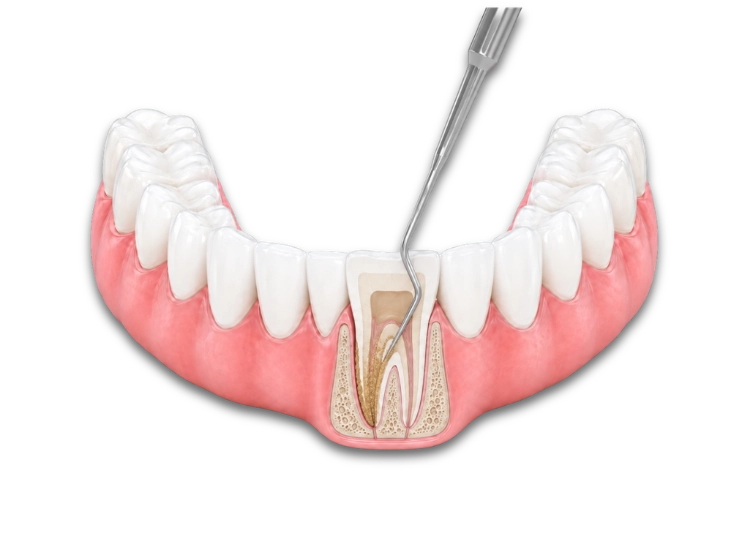
Periodontics is the dental specialty that deals with the health of the gums and the bone that supports the teeth. Its main function is to prevent, diagnose, and treat periodontal disease—more commonly known as periodontitis or pyorrhea—which progressively destroys the tissue supporting the teeth, eventually leading to tooth loss if not treated in time.

What worries patients the most is not bleeding gums, but losing their teeth. And that is precisely what a properly performed periodontal treatment prevents. At our clinic in Ibi, we offer everything from professional cleanings and scaling to advanced periodontal surgery, always with the goal of halting the disease and stabilizing your oral health in the long term.

Early diagnosis

Periodontitis progresses painlessly in its early stages. Early diagnosis allows it to be treated with much less invasive procedures and offers a better prognosis.

Personalized Treatment

Every case of periodontitis is different. We design a treatment plan tailored to the severity of your condition, your overall health, and your habits.

Essential for Implants

A mouth with active periodontal disease is not a candidate for implants. Treating the gums is always the first step in any dental restoration.

Common Signs

When do you need periodontal treatment?

Periodontal disease is very common, and many people have it without realizing it because it doesn’t cause pain in its early stages. These are the most common warning signs that your gums need attention.

Gums that bleed when brushing

Bleeding when brushing or flossing is not normal. It is the first symptom of gum inflammation and, if left untreated, can progress to full-blown periodontitis.

Receding gums or teeth that appear longer

Gum recession is a result of the destruction of periodontal tissue. The teeth appear longer and the roots become exposed, increasing sensitivity and the risk of root caries.

Tooth mobility or gaps between teeth

When the bone that supports the teeth is destroyed, the teeth begin to shift or move apart. This is a sign of advanced periodontitis that requires urgent treatment.

Persistent bad breath

Chronic bad breath that does not improve with regular oral hygiene may indicate the presence of periodontal bacteria that have accumulated in pockets that a toothbrush cannot reach.

What kind of treatment do I need?

Periodontal treatment depends on the severity of the disease and the extent of bone and gum destruction. After the diagnosis, Dr. Hernández will explain which option is best for you.

Prophylaxis and tartar removal

Prophylaxis and tartar removal

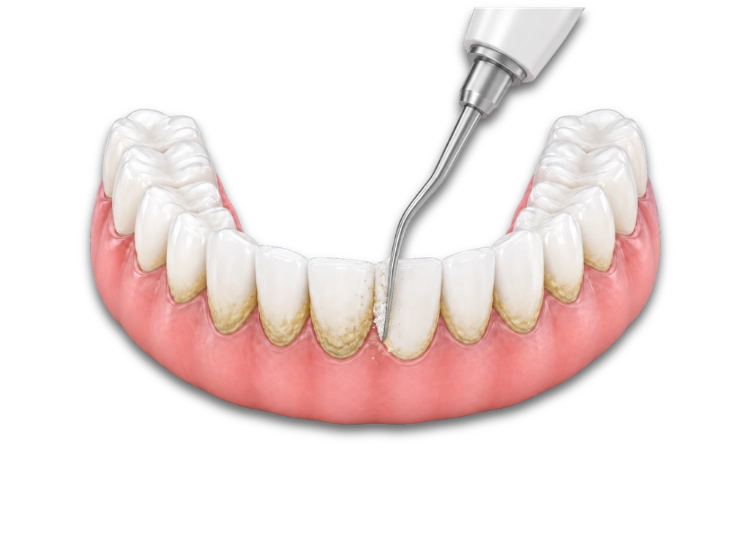
Professional cleaning removes accumulated tartar and bacterial plaque that a toothbrush cannot remove. It is the ultimate preventive treatment and the foundation for maintaining healthy gums. It is recommended every 6 or 12 months, depending on the individual case.

Root Planing and Smoothing

Root Planing and Smoothening (RAR)

The standard treatment for periodontitis. Using manual and ultrasonic instruments, we remove tartar and bacteria that have accumulated in the periodontal pockets, beneath the gums, down to the root surface. The procedure is performed under local anesthesia.

Periodontal Surgery

Periodontal Surgery

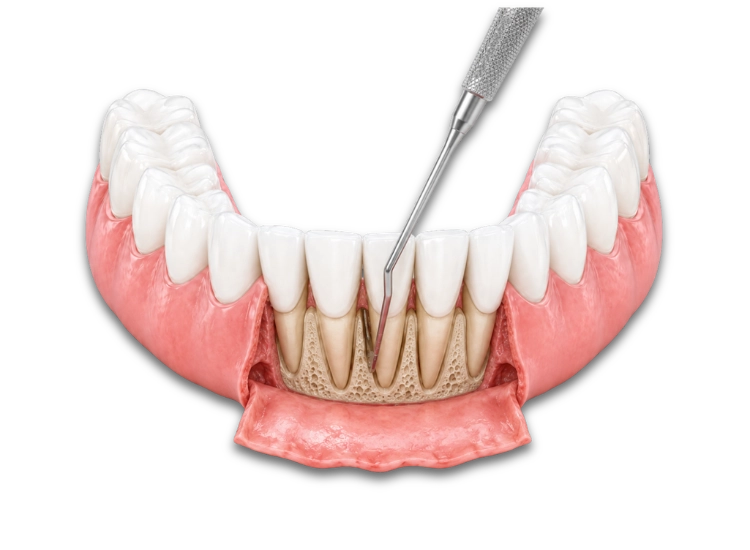
When the disease is severe and scaling is not sufficient to reach all affected areas, periodontal surgery allows for the tissue to be opened up, a thorough cleaning to be performed, and, in some cases, the lost bone to be regenerated. Dr. Hernández has specific training in advanced oral surgery.

Periodontal Maintenance

Periodontal Maintenance

There is no definitive cure for periodontitis—once it is under control, it requires regular checkups and cleanings to prevent it from flaring up again. Periodontal maintenance is the most important phase of long-term treatment.

BEFORE YOUR APPOINTMENT

6 Things You Should Know About Periodontal Disease

Periodontitis is one of the most common diseases among adults and one of the least understood. Here, we’ll explain the most important facts so you can understand what you’re dealing with, what you can do, and what to expect from treatment.

01

Gums that bleed when you brush your teeth are not normal

Bleeding is the first sign of inflammation. Many people dismiss it as normal and ignore it for years. Occasional bleeding may be a sign of gingivitis—which is reversible—but if it persists, it may indicate the onset of periodontitis.

02

Periodontitis doesn’t hurt

Unlike tooth decay or an infection, the destruction of periodontal bone is virtually painless. Many patients come to the clinic with advanced disease without having experienced any prior pain. Early diagnosis makes all the difference.

03

There is treatment, but no definitive cure.

Periodontitis can be controlled and stabilized, but it cannot be permanently cured. Once treated, it requires regular checkups and maintenance to prevent it from progressing again. Maintenance is just as important as the initial treatment.

04

It is the leading cause of tooth loss in adults

Apart from cavities and trauma, untreated periodontitis is the most common cause of tooth loss in adults. With proper treatment and maintenance, you can keep your natural teeth for a lifetime.

05

It is related to other diseases of the body

Scientific evidence links periodontitis to an increased risk of diabetes, cardiovascular disease, pregnancy complications, and other systemic conditions. Taking care of your gums isn’t just about taking care of your teeth.

06

Implants don’t work unless they’re treated

A mouth with active periodontal disease is not a candidate for implants. Periodontal bacteria can cause peri-implantitis—the same disease around the implant—and cause it to fail. Treating the gums is always the first step.

Dr. Fernando Hernández

Who performs periodontal treatment?

Dr. Fernando Hernandez in his new pajamas

The health of your gums is the foundation for everything else. Without healthy gums, no implant will last, and no restoration will be effective.

I am Dr. Fernando Hernández, a specialist in Oral Surgery and Implantology and co-director of the Hernández & Espuelas Dental Clinic in Ibi. I hold an Official Master’s Degree in Oral Surgery and Implantology from the University of Murcia, and since 2016 I have served as an adjunct professor for that same master’s program, which keeps me constantly up to date on the latest surgical techniques and protocols. Periodontics and implantology are closely linked: a mouth with active periodontal disease cannot safely receive implants, which is why periodontal treatment is always the first step in any restoration we perform at the clinic.

Testimonials

What do our patients say?

At Hernández & Espuelas, every patient has a different story, but they all have one thing in common: they came in with a question or a problem and left with a solution. Here’s what they’ve told us.

I wanted to get implants, but they told me I had to treat my gums first. At first, it seemed like an unnecessary detour, but Dr. Hernández explained why it was essential to do it in that order. I underwent periodontal treatment, waited as long as they told me to, and now I have my implants with no problems at all. You have to follow the instructions and not skip any steps.

Luis A.

I came here because my gums had been bleeding for years, and I’d just gotten used to it. They did a thorough examination and explained that I had moderate periodontitis. They performed the scaling in two sessions, and the difference was huge. My gums don’t bleed at all when I brush anymore, and my breath has improved a lot. I wish I’d come in sooner instead of putting up with it for so long.

Tomás R.

I was diagnosed with periodontitis at another clinic, but they never really explained to me what that meant or what needed to be done. Here, Dr. Hernández explained everything to me from the very beginning—with X-rays and everything—so that I could understand exactly what was going on in my mouth. The treatment took a long time, but the results are very noticeable. I’ve been coming in for checkups for a year now, and my gums are stable.

Laura M.

How do we do it?

Step-by-Step Guide to Periodontal Treatment

Periodontal treatment isn’t a one-time visit—it’s a step-by-step process tailored to the severity of each case. We’ll walk you through the process from start to finish so you know exactly what to expect.

1

Comprehensive periodontal diagnosis

We perform a comprehensive periodontal examination—measuring the depth of the pockets around each tooth—along with a series of X-rays to evaluate the bone. This diagnosis allows us to classify the severity of the disease and design a treatment plan.

2

Hygiene Instructions

Before any treatment, we’ll show you how to brush properly and how to use dental floss or interdental brushes effectively. Without good oral hygiene at home, no periodontal treatment will work in the long run.

3

Active phase — RAR or surgery

We perform scaling and root planing under local anesthesia, one quadrant at a time. When necessary, we complete the treatment with periodontal surgery to access areas that cannot be reached with conventional scaling.

4

Reassessment

Between 6 and 8 weeks after the active phase, we repeat the examination to assess the response to treatment. We evaluate whether the bags have become shallower and whether any additional treatment is needed before moving on to the maintenance phase.

5

Periodontal Maintenance

Once the disease has stabilized, we establish a schedule of regular checkups—usually every 3, 4, or 6 months, depending on the individual case—to monitor the condition of the gums and prevent periodontitis from progressing again.

Do you have any questions?

Frequently Asked Questions About Periodontics

Take the first step

Your first visit is completely free

Come meet us—no strings attached. We’ll give you a complete evaluation, explain exactly what you need, and tell you how much it costs. No fine print, no pressure.

First visit free — examination, diagnosis, and estimate at no cost
Interest-free financing for up to 24 months and payment terms of up to 60 months
Specialists with more than 14 years of experience in each area
All medical specialties in one clinic, with no referrals needed

No waiting lists · We respond within 24 hours

Scroll to Top